
Bean Hunting in Hanoi
The guidebook said five million mopeds and a noise level to match. It did not say the coffee was upstairs, behind a door you would walk past twice.
Hanoi, October 2022. The second chapter of the Vietnam adventure.
We hadn't come to Vietnam to tick off the guidebook.
We had come to see our son and our daughter-in-law, who had temporarily made Vietnam their home, and we had already decided that once we'd spent a few days with them in Ho Chi Minh City we would drift a little off the well-worn trail. He couldn't stop talking about the Central Highlands: the peace of it, the wildlife, the complete contrast to the city. "We think you'd love it," he said. That was all the encouragement we needed.
A little searching led us to an eco-lodge on the edge of Lak Lake, near Buôn Ma Thuột. Another traveller had described the area, casually, as "where the coffee is grown." At the time, that meant very little to us. Looking back, it meant everything.
We had no idea that a few days later we would be standing on a farm, holding coffee cherries in our hands. A question was asked of us there that we could not answer, and if you have read the first chapter of our Vietnam adventure, you will know which one. We thought that was the end of the conversation. It wasn't. We had not set out looking for coffee, and now coffee was leading the way.
Hanoi, where we planned to spend a few days before flying home, would give us plenty of "grounds for discovery", three words that would later become the strapline for Band of Beans, although we had absolutely no idea of that at the time.
From our guidebook, we had imagined seeing coffee shops on every corner. We soon realised that many of the city's best coffee haunts reveal themselves only to those prepared to look a little harder. The guidebook was blunt about the Old Quarter: five million mopeds and a noise level to match. Having experienced the organised chaos of Ho Chi Minh City's traffic, we decided to ease ourselves in gently, booking a quiet hotel in what visitors call the French Quarter and telling ourselves we would visit the Old Quarter each day and retreat somewhere peaceful at night.
Armed with our guidebook and our phones, we set off in search of our first coffee. We walked straight past it. Then past another. It wasn't that the map was wrong. We simply hadn't realised that in Hanoi, some of the best cafés like to hide in plain sight.
Five million mopeds turned out to be generous. The Old Quarter is the thirty-six streets, as Hanoi still calls them, folded into a space far too small for them, each one named for the trade once sold along it, and the whole of it moves at once. Horns, the putt of small engines, the tring of bicycle bells, and somewhere in it always a voice calling, "Where are you from?" The pavements are not for easy walking. They are an extension of the shopfronts: parked scooters, cooking fires, plastic stools, and a shortcut for any rider who fancies it. After dark the whole thing tightened. Steam from street kitchens caught the light of bare bulbs. The horns didn't stop, they just got closer. And somehow, the whole impossible thing worked.
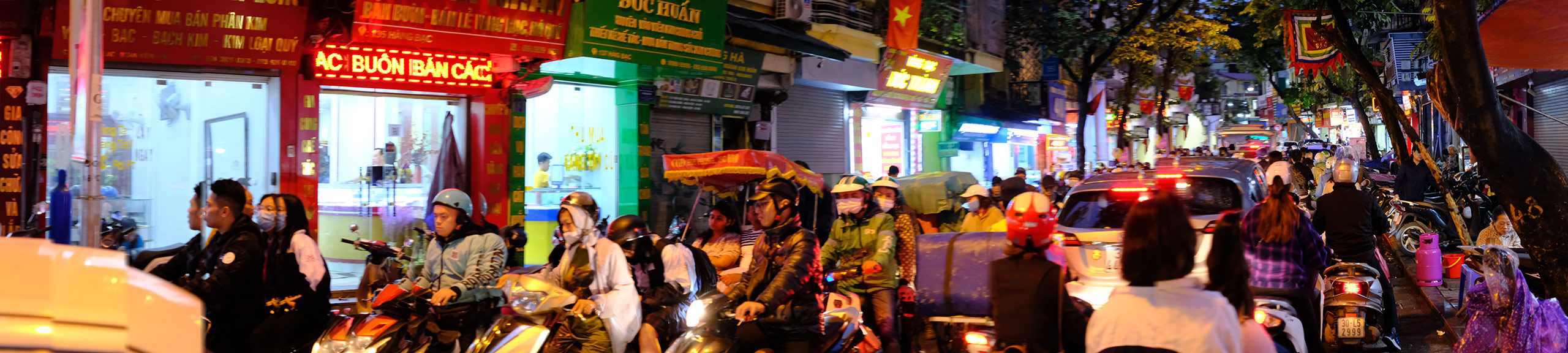
Neither of us are good company when hungry. The horns and the heat had been an adventure for the first hour. By the second, with no data on our phones and no idea which street was which, one of us was quietly regretting the entire thing. We found solace up a narrow flight of stairs, in a first-floor restaurant, the noise softened by just one storey and good food doing the rest.
The breakthrough came the next morning, over breakfast, and it was small and a little silly. We decided to play Hanoi at its own game. If the city wanted to hide its coffee shops, we'd make a game of finding them. No lists and no top-ten anything. We laughed, gave our little game a name, "Bean Hunting" and headed out with a hand-drawn map to get us back to the hotel.
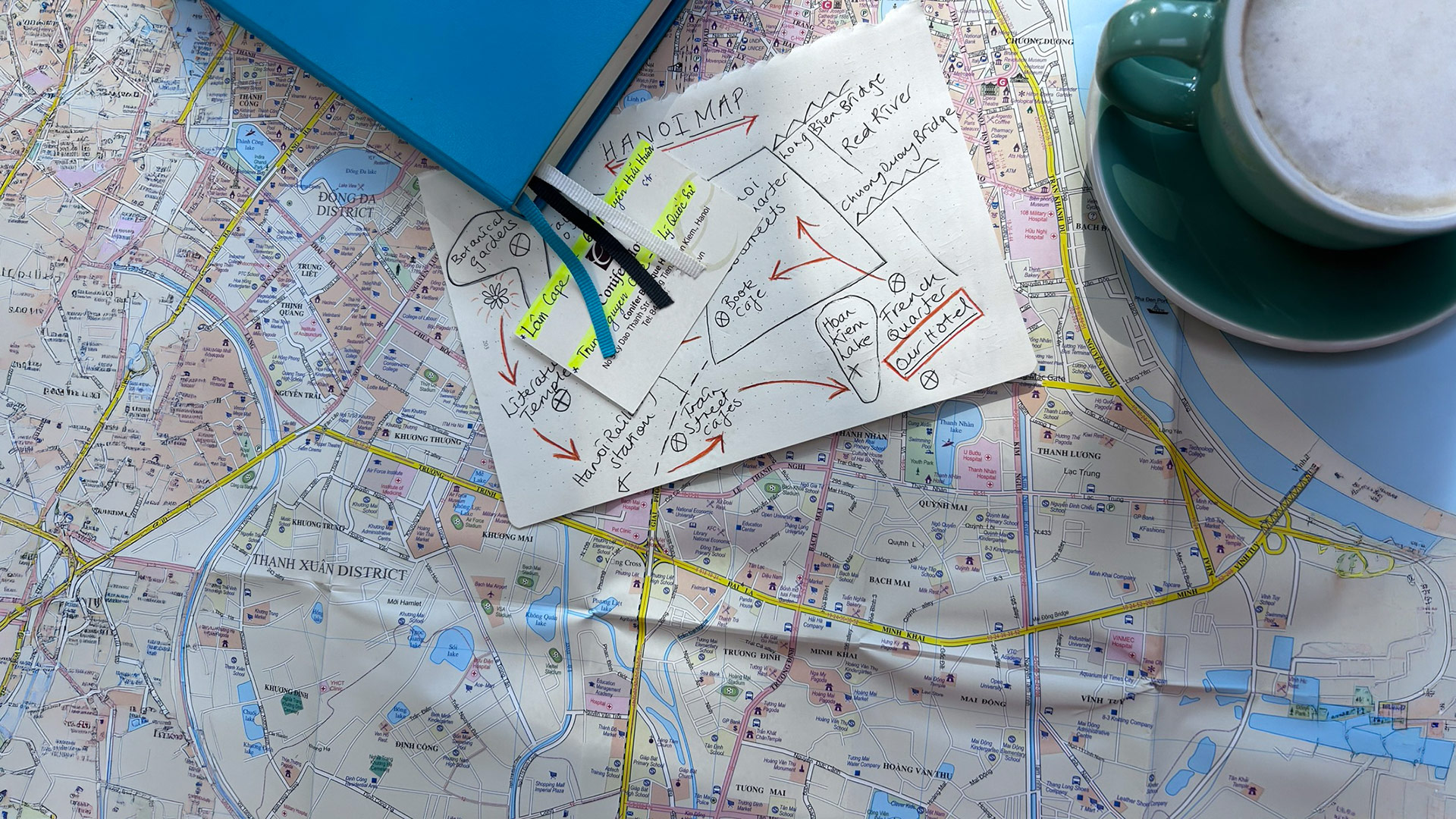
Looking up instead of at our phones, we started to see things. Beautiful old windows, tiny shrines tucked into doorways and people quietly getting on with their day. Tiny doorways disappeared between shops. Narrow staircases climbed into buildings that looked more like someone's home than a café. Sometimes the only clue was a hand-painted sign, or the smell of freshly brewed coffee drifting down from somewhere above.
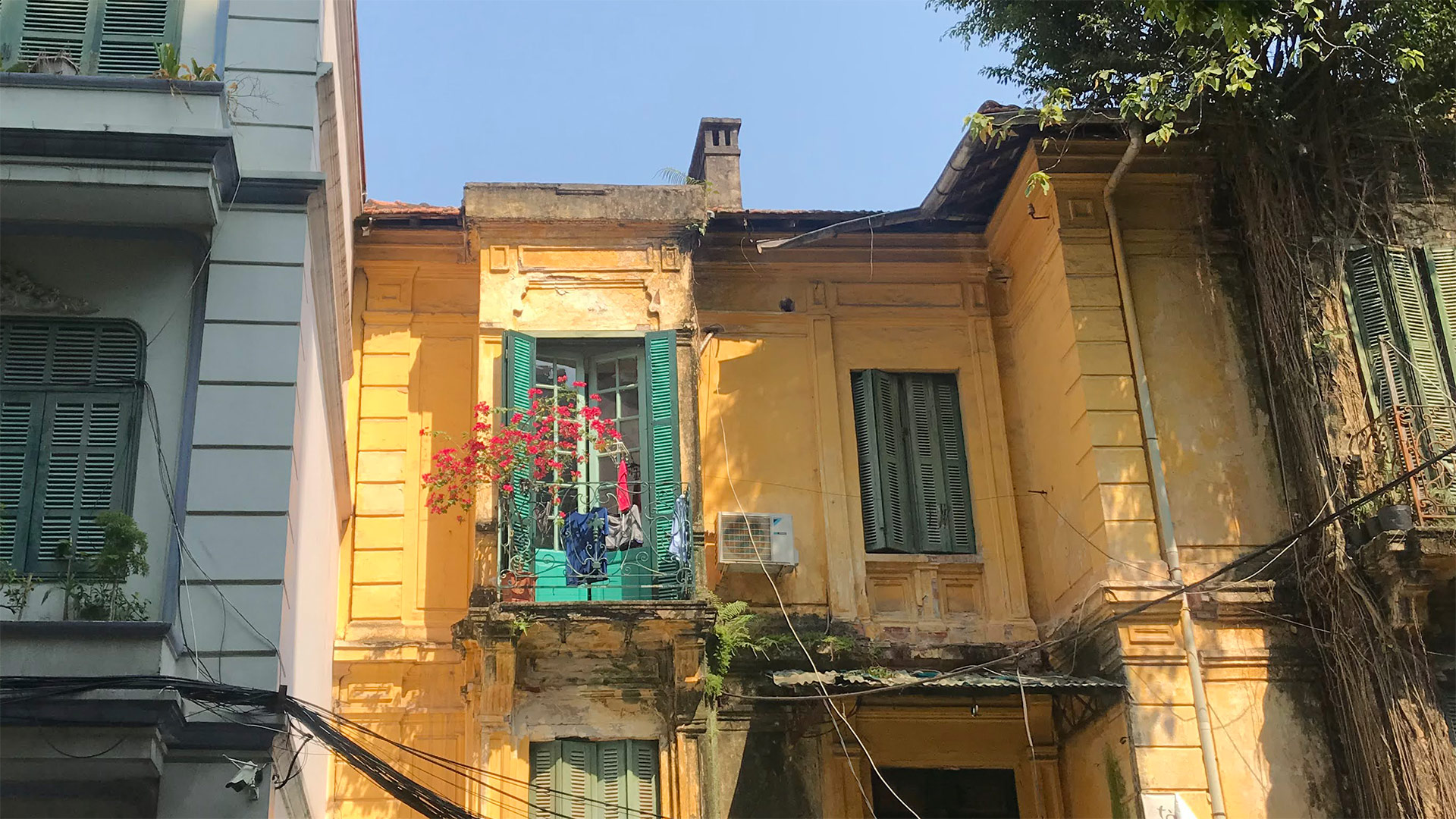
Some of the best cups were not on the street at all. The Old Quarter builds tall and narrow, houses pressed shoulder to shoulder, with precarious extensions stacked on top like a paused game of Jenga. We climbed tightly coiled staircases, never quite certain we were allowed, and found rooms at the top: balconies and small rooftops lifted above the noise, where the same street we had been lost in suddenly made sense seen from above. We stopped trying to find the cafés everyone else had recommended and simply followed wherever the coffee led us. We climbed into wonderfully strange places and drank rather a lot of coffee.
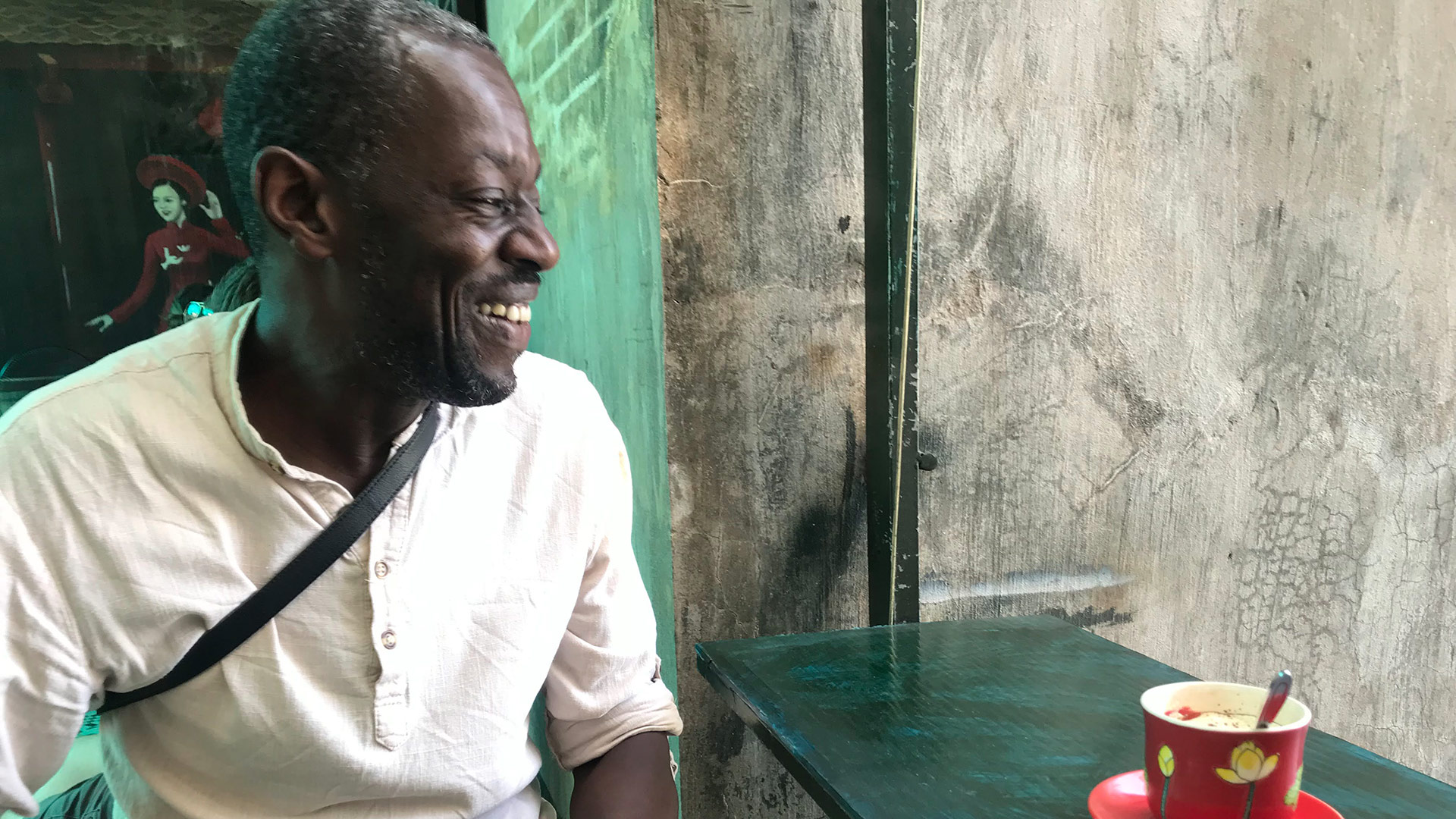
On the street, sat on tiny plastic stools, a simple black coffee was cà phê đen. Add condensed milk and it became cà phê nâu. At the next café, a drink on the neighbouring table we couldn't identify became our first cà phê trứng, egg yolk whipped with condensed milk, poured over strong coffee. Surely that couldn't work? It absolutely did, and how we make it at home now is a story in itself. Then coconut coffee, cà phê dừa. Then coffee made with yoghurt, cà phê sữa chua, surprisingly tart but wonderfully refreshing in the humid afternoon heat. By the end of the second day we had even tried coffee made with salt, cà phê muối.
One of the best finds wasn't a café at all. Tranquil Books & Coffee sat hidden from the bustle of the Old Quarter: coffee and books under one roof. We were both in heaven. Somewhere in a book about Vietnam we found a sentence that stopped us. Coffee has not always been here. The story goes that French missionaries brought it in the 1850s, and what they brought was arabica, because in 1857 arabica was the only coffee Europe knew how to grow. Robusta had not yet been described.
It did not go the way they expected. One thing gardening teaches you is that plants have a habit of telling you where they want to grow. You can fight nature for years, or you can listen. Arabica didn't particularly like much of Vietnam; too hot, too humid, too disease-prone. The French may have introduced coffee to Vietnam, but it was Vietnam that discovered Coffea canephora, better known as robusta, was the happier plant.
Almost all of Vietnam's coffee is robusta today, and back home robusta has something of a bad reputation: the bean of instant coffee, the cheap bulk in an espresso blend, there for the caffeine and not for the flavour. Sitting on a plastic stool in the Old Quarter, the insult stops making sense. Robusta is naturally stronger, more bitter, and carries almost twice the caffeine of arabica, and suddenly the generous spoonfuls of condensed milk, the creamy egg topping and all those inventive recipes started to make perfect sense.
Almost every coffee we drank in Hanoi's street cafés arrived the same way, dripping slowly through a little metal filter called a phin. It sits on top of your glass and relies on nothing more than gravity and time. There is no rushing a phin: five slow minutes for a small, thick, strong coffee. One barista showed us how the grounds are gently wetted before brewing, to let them bloom, which reminded Alice at once of watering dry soil in her gardening days, you dampen the surface first and let it soak in before giving it a proper drink. The first time, we found ourselves glancing impatiently at the phin, willing it to hurry up. Nick does prefer his coffee hot.
By the third cup we had stopped watching the coffee altogether. Instead, we watched Hanoi: families chatting, elderly men lingering over their morning coffee, bicycles piled impossibly high with flowers, balloons and every imaginable cargo.
One such cup sat us down beside a railway. We found a stretch of Hanoi where cafés line a working train track with tables set an arm's length from the rails. You order, you sit, and for a while it is simply a narrow street with good coffee. Then word passed along the row. Phones came out. Chairs and tables were hooked back in, children hurriedly called in off the tracks, and moments later a beast of a train thundered past, close enough to stir the air above our cups. The noise was enormous, and then it was gone. The tables came back out, fresh coffees were poured, and the conversations carried on as though nothing unusual had happened.
The moments weren't the ones we'd planned. They were the ones we simply stumbled across.
We left Hanoi with a phin carefully wrapped in a shirt, notebooks full of scribbles, and the feeling that we had found our grounds.
Our next adventure would take us to Ethiopia, where the story of coffee begins. But that's for another chapter.