
Vietnam, 2022.
We’d come to Vietnam for the usual reasons. The food, the culture, the adventure of somewhere completely different from home. Our route was simple: Ho Chi Minh City to visit our son, then up to Buon Ma Thuot in the Central Highlands, then Hanoi.
Buon Ma Thuot had been mentioned by another traveller as “where the coffee comes from.” We were more excited about the pho.
Coffee, at the time, meant flat whites between meetings back in London. We knew Vietnam produced coffee. Vaguely. We had no real understanding of what that meant.
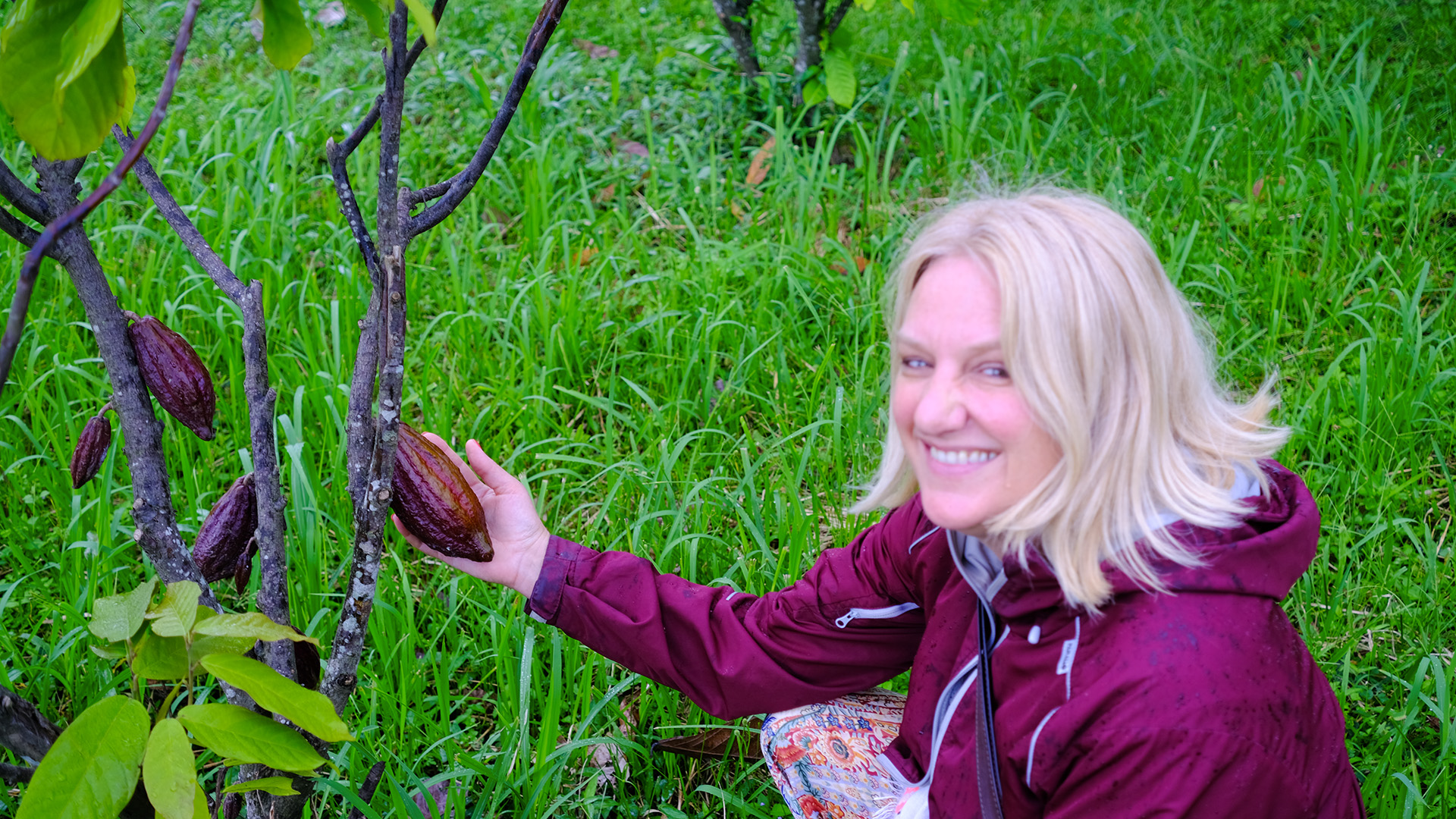
One morning at our guesthouse, Tented Lak, we followed a trail of butterflies from the garden into a small farm next door. The first plants had large pods hanging from them. Alice thought they might be some kind of fruit. We had no idea we were looking at cacao. A bit further, bushes heavy with bright red cherries that looked almost too perfect to be real. Coffee cherries, though we wouldn’t learn that for hours. The third crop we could actually recognise. Avocados.
Three things we consumed every day back home. Growing right in front of us. And we couldn’t identify a single one.
It was embarrassing. And then it was fascinating.
“The red cherries, that’s coffee,” the guesthouse owner explained when we got back, smiling the way people do when city visitors discover where food comes from. “Very good coffee. My family grows small amount, but for real coffee farm, you should meet my cousin. His farm much bigger, very traditional methods. He speaks English well.”
We had no idea we were about to meet the person who would change everything.
The farmer arrived the next morning with the quiet presence of someone comfortable in his own landscape. Probably in his fifties, with hands that told you everything about how he’d spent his life. His English was careful and clear, each word chosen with the precision of someone who’d learned the language through necessity.
“My cousin says you found our coffee cherries yesterday,” he said. “You never saw coffee growing before?”
We admitted we hadn’t. He listened with the kind of amused understanding that suggested this wasn’t his first encounter with tourists surprised by farming basics.
“Most people who drink our coffee, they never come here,” he said. “They know coffee comes from Vietnam, but they don’t know what that means.”
The motorbike ride to his farm took us through landscapes that looked different to our newly educated eyes. Those weren’t just green plants on hillsides. They were coffee farms. Each one representing families, livelihoods, traditions we’d never considered.
His farm spread across several terraced hillsides. Rows of coffee plants stretched into the distance. But what struck us wasn’t the scale. It was the complexity. Coffee trees grew alongside other plants in what looked like a deliberately orchestrated natural system. Seven different crops in carefully arranged relationships. Coffee providing canopy, beans enriching the soil, fruit trees attracting birds that controlled pests naturally.
“Coffee in Vietnam is not just drink,” he explained as we walked between the rows. “Coffee is family business, community business. These plants feed my children, send them to school. But also, they connect us to land, to tradition, to each other.”
“These coffee trees, they are like family members. I know each section, how it grows, when it produces best fruit. Some trees twenty years old, still giving good coffee.”
The farmer
He showed us details we never would have noticed. The spacing between plants, the pruning, the soil health he could assess just by looking. His father had taught him. His father’s father had taught his father.
“But coffee farming, it changes now,” he said. “Climate different, market different, young people want different work.” No bitterness. Just the observation of someone who’d watched his world evolve while maintaining connection to methods passed down through generations.
After an hour of walking, he invited us to sit for coffee outside his farmhouse. Beans he’d roasted that morning. The brewing was slow, deliberate, treating the coffee with a kind of respect we’d never seen. The coffee itself was unlike anything we’d had in London. Earthier, more complex. It tasted like place. Like highland soil and morning mist and generations of knowledge about how to coax the best from these specific plants in this particular landscape.
“Do you know the hands that picked your coffee?”
The question hung in the highland air between us.
“When you drink coffee in London,” he continued gently, “do you know who grew the beans? Do you know their names, their families, how they live?”
We didn’t. We had no idea.
Following those butterflies had shown us we couldn’t recognise the plants we consumed every day. That question went deeper. We were consuming the product of someone’s labour, someone’s knowledge, someone’s daily life, without any awareness of who that person was.
Before we could attempt an answer, he stood and led us to a section of his farm we hadn’t explored.
What he showed us was seven crops growing in carefully orchestrated relationships. Coffee providing canopy for shade-loving plants below. Beans enriching soil that fed the entire system. Fruit trees attracting birds that controlled pests naturally.
“When my grandfather farm here,” he explained, “he only grow coffee. When prices fall, family has nothing. So my father learn to grow different crops together. Now if coffee price low, we still have avocado, banana, vegetables. Farm supports itself.”
He paused. “Also, this way is better for land. Soil stays healthy, we don’t need much chemical fertiliser. Birds come, insects balanced. It’s more work to understand, but once you learn, it works better than single crop.”
“Do you know the hands that picked your coffee?”
The farmer
The highland sun was setting. We were holding coffee brewed from cherries we’d watched him pick, processed with methods his grandfather had taught him, grown in a system we’d never imagined existed.
“How many other things do we consume without knowing anything about them?” Alice asked.
It wasn’t rhetorical. We started counting. Tea. Chocolate. Rice. Spices. We consumed them every day and understood nothing about their origins, the people who grew them, or the knowledge required to produce them. We’d considered ourselves conscious consumers. Sitting on his farm, we realised how shallow that awareness actually was.
Standing to leave, he offered us a small bag of beans from his farm. “When you drink this coffee with friends,” he said, “maybe you tell them about polyculture farming, about traditional knowledge, about connection between farmer and consumer. Maybe they become curious too.”
His beans travelled with us to Hanoi. In the street-side cafes with their tiny plastic stools and elaborate brewing rituals, every cup triggered the same questions he’d planted. Who grew these beans? What was their story?
Back in London, the questions became impossible to ignore. Every morning flat white carried the weight of everything we’d learned in Buon Ma Thuot. We couldn’t drink coffee normally anymore.
We went to bookshops first. Surely someone had written about the people behind our coffee. We found almost nothing. Plenty about coffee as a commodity. Market trends, agricultural yields, economics. Almost nothing about coffee as culture. As community. As something passed between generations.
Libraries next. The British Library, university collections, specialised archives. The results were sparse. This led us to SOAS, the School of Oriental and African Studies. Even among researchers who understood traditional knowledge systems, we found little that captured coffee farming as living cultural practice.
The absence was startling. A commodity consumed by billions of people daily, and the human stories behind it were largely invisible.
But one name kept appearing in every academic source. Kaffa, Ethiopia. Coffee’s birthplace. The region where wild Arabica still grows in highland forests the way it has for thousands of years.
Sitting in our London flat, drinking the last of his coffee, we knew something had changed. We weren’t curious tourists anymore. We were following a question we couldn’t put down. And it was pointing us somewhere.
The adventure had begun.
Where to from here?
Next chapter
Bean Hunting in Hanoi: the game we invented to find the coffee this city hides.
Taste what we’re finding
Follow the Adventure
Follow the Adventure
Field notes, producer stories, and cultural discoveries from wherever the road takes us.